
:format(webp))
Help prevent cross-contamination with a colour system
If there is an infected animal in the Red stable, you do not want the disease to spread to the Yellow stable. Similarly, adult animals will have build up immunity against certain pathogens in their environment, but you will want to prevent the spread of these pathogens to the area where young animals are held, as these pathogens can still have serious consequences for young animals.
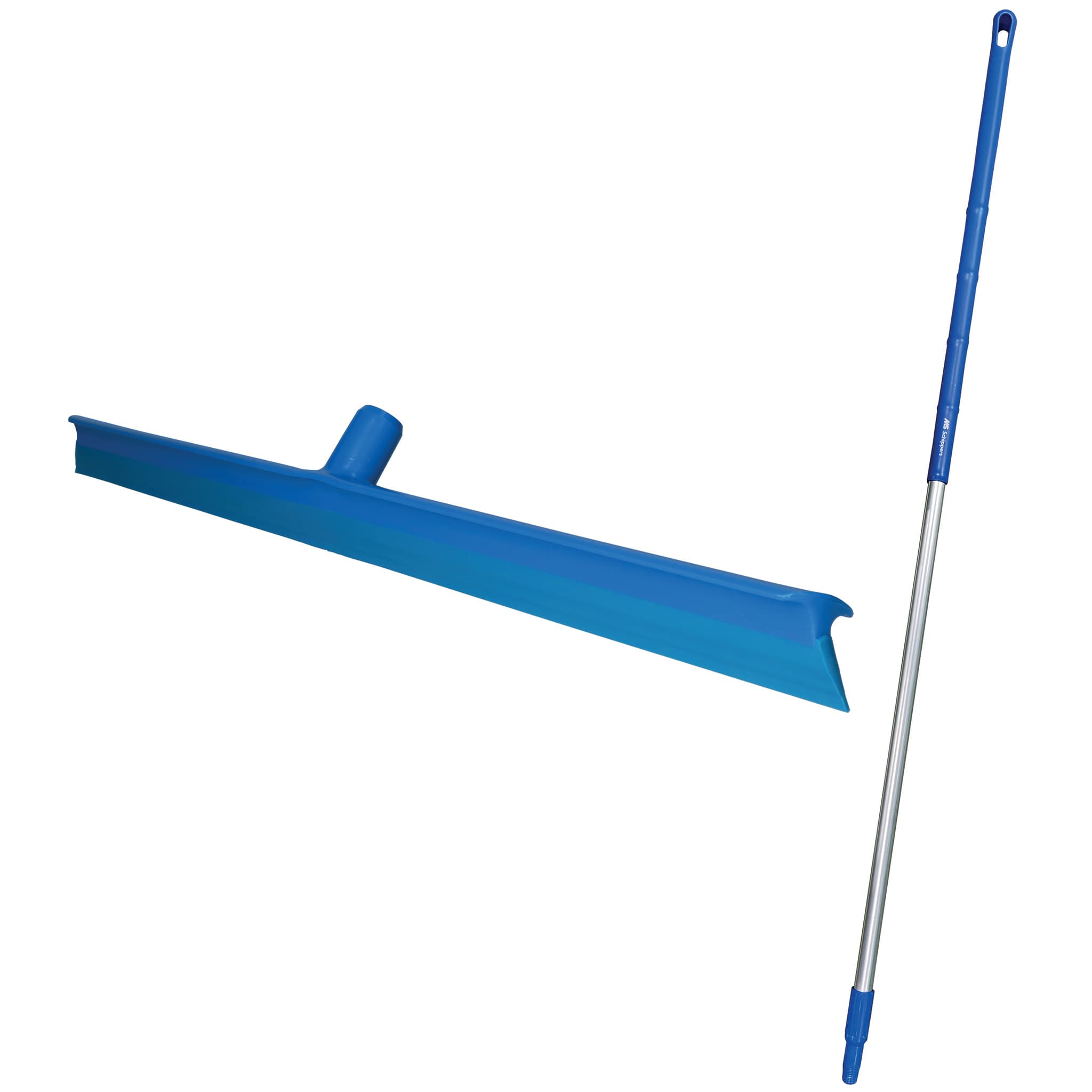
Therefor it is important to avoid the transmission of germs between animals. A major threat to this transmission is movement of personnel and the tools, equipment and attributes they bring with them. With a colour system, these tools and attributes can be kept separate by animal group or department. This means that boots, overalls, shovels, brooms and floor pullers are in the same colour of the stable they are used in.
The advantages of a colour system
Improved biosecurity
Separating the tools and clothing for each area with a dedicated colour system directly reduces the risk of cross-contamination. Furthermore, it helps to promote a culture of biosecurity.Efficient organization
Simplify your daily routine with efficiently organized tools and clothing by colour for each area. Improve efficiency and reduce the risk of disease.Visibility
Coating the area in the chosen colour can help to simplify identification for new workers and make the categorization visible for everyone. Take your colour system to the next level with coating and signs.How a colour system prevents cross-contamination
A colour systems prevents workers from using the same tools, boots and clothing in all locations, which causes cross contamination. With a colour system each location has their own colour coded tools and clothing, to clearly separate the materials used in each location.:format(webp))
:format(webp))
The colour system in practice
A colour system is very easy to implement. This starts with using the appropriate coloured tools, such as shovels, brooms, floor pullers, coveralls and footwear, specifically assigned to each department.
To make the separation between departments clear, you can choose to apply colour coating or place color-coded signs. This way the separation is not only visible in the attributes but also visually in the barn.
Take a look at our colour system assortment
Colour system examples
:format(webp))
:format(webp))
Raise biosecurity awareness with a colour system
By keeping all tools, clothes and equipment separated per barn you significantly reduce the risk of pathogens spreading from one area to the next. The dedicated colours make it easy to identify a misplaced item or to identify workers that did not follow protocols.
Moreover a colour system helps to create a culture of biosecurity by making the system highly visible, raising awareness about biosecurity with workers.
Frequently asked questions about colour system
:format(webp))

:format(webp))
:format(webp))
:format(webp))
:format(webp))