
How to clean a pig pen effectively?
To effectively clean and disinfect a pig farm you need a structured hygiene protocol: remove organic waste, pressure wash the facility, apply a foaming detergent to break down organic matter, disinfect with professional products and verify hygiene levels before introducing new animals.
This process dramatically reduces pathogen pressure in the barn and helps prevent diseases such as coccidiosis, E. coli infections, PRRS and clostridial enteritis.
Proper cleaning between production cycles is one of the most effective biosecurity measures in pig production. A clean barn improves animal health, growth rate, feed efficiency and reproductive performance.
Why is cleaning and disinfecting important?
Each step in cleaning and disinfecting reduces germ levels in pig pens. This is essential for preventing diseases in pigs such as coccidiosis, E. coli, PRRS and Clostridial enteritis.
:format(webp))
After emptying
50.000.000 Germs/cm²:format(webp))
After rough cleaning
20.000.000 Germs/cm²:format(webp))
After cleaning with MS TopFoam
100.000 Germs/cm²:format(webp))
After disinfecting with MS MegaDes
<500 Germs/cm²The 7 steps for cleaning your pig pen
Cleaning and disinfecting a pig stable is crucial for maintaining animal health and ensuring a productive farming environment. This comprehensive guide outlines a step-by-step approach to effectively clean and disinfect your pig barn, ensuring a fresh start for each new round. Extra tip: download the cleaning protocol.
Safety first: Ensure your own safety when cleaning the pig pens by wearing protective clothing, including disposable coveralls, face protection, gloves, footwear and earmuffs.
:format(webp))
:format(webp))
Step 1: Empty the pig pens and clean it thoroughly
For an effective cleaning process, it is crucial to start with an empty, dry-cleaned pig pen. Make sure most of the manure has been removed and the pens are prepared for cleaning with water.
Remove pigs and equipment
Begin by relocating all animals and removing any movable equipment from the barn. This step is essential for comprehensive cleaning and disinfecting.Start with dry cleaning
Use brooms, brushes and scrapers to sweep and scrape away loose organic materials and dirt. This initial cleaning reduces the amount of contaminants and prepares the surface for more intensive cleaning.:format(webp))
Step 3.1: Identify pollution type
Understanding the types of contamination present in your swine barn is necessary before your can select the right cleaning products. Contamination in a swine barn is normally classified into two types: organic and inorganic contamination. We recognize a third type: historical contamination; which is the result of ineffective cleaning over several rounds. Historical contamination can build-up over time, and consist of multiple layers of left-over organic and inorganic pollution.
:format(webp))
Organic pollution
Manure, feed residues, skin fats, and other biological wastes:format(webp))
Inorganic pollution
Water minerals, lime or calcium deposits, and iron:format(webp))
Historical pollution
A build up of multiple mixed layers of pollution, caused by ineffective cleaning over multiple rounds.Step 3.2: Choose the right foam for the job
The detergent in foam cleaners breaks down the organic pollution left behind after high-pressure cleaning. Organic pollution consists of several layers and forms a barrier that can keep disinfectants from reaching pathogens. Removing fats by cleaning with a detergent is a crucial step in creating a low pathogen habitat because it exposes all pathogens for elimination during disinfection.There are two types of foam cleaners:
- Alkaline foam cleaners are most effective against organic contaminants and can be effective against historical contaminants in high concentrations.
- Acidic foam cleaners excel in removing inorganic and historical contamination.
Historical contamination can be organic or inorganic. A knockdown treatment is the most effective in resetting heavy historical pollution. Determine whether alkaline or acidic foam cleaners are more suitable based on the pollution type and cleaning frequency.
:format(webp))
Foams comparison
| Characteristics | ||||||
|---|---|---|---|---|---|---|
| - | 30 min | - | - | 10 min | 5 min | |
| Alkaline | Acid | Acid | Alkaline | Alkaline | - | |
| Price | Loading... | Loading... | Loading... | Loading... | Loading... | Loading... |


:format(webp))
Step 3.3: Foam the pig pen
Applying foam cleaner is an important step, which ensures effective cleaning of every surface by breaking down biofilms layers and organic matter.
Apply the foam cleaner - 30 min
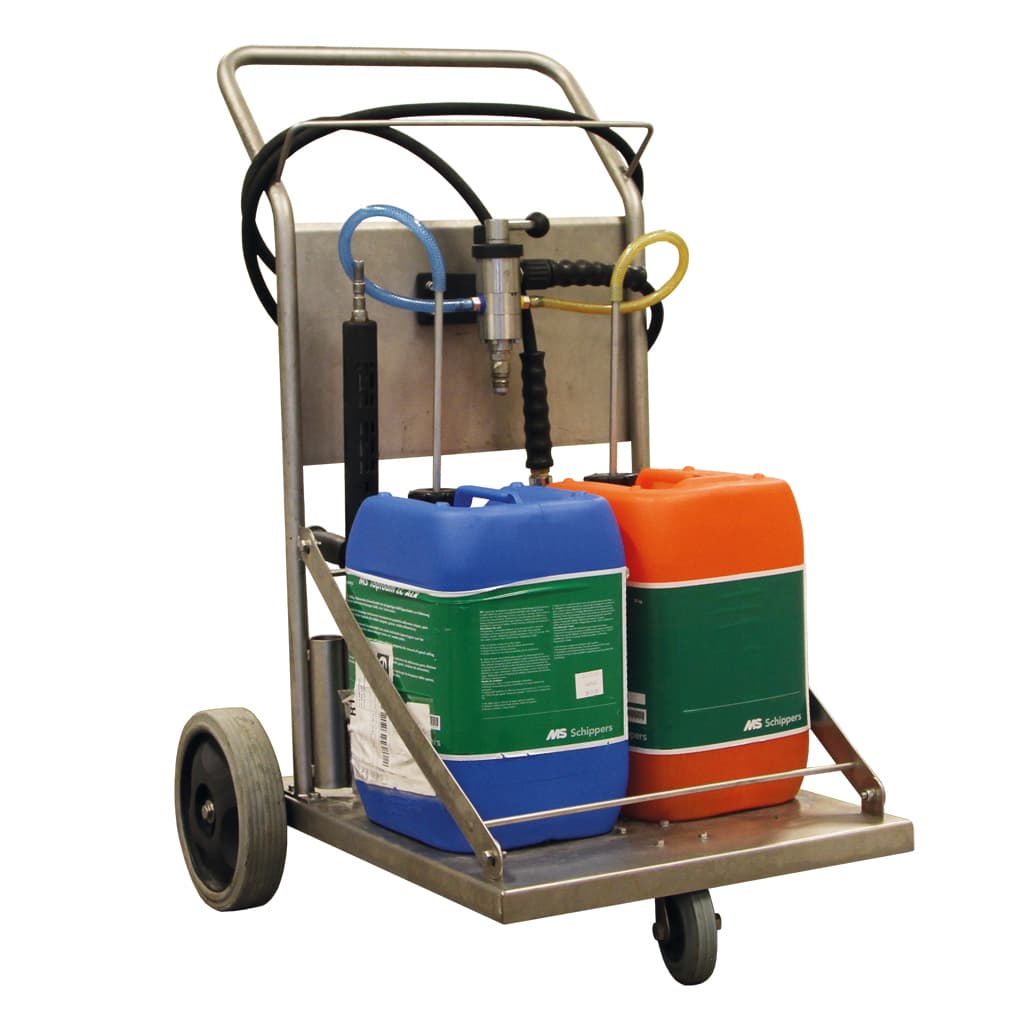
Spread the foam evenly over all surfaces and follow concentration and contact time guidelines to maximize cleaning effectiveness. Foam all surfaces that pigs may come in contact with and use a 1-2% concentration of MS Topfoam. Allow the foam to act for 30 to a maximum of 120 minutes (avoid letting it dry).:format(webp))
Step 4: Rinse with water and let it dry
After the foam has done its job, it's time to rinse off the cleaning agents and dry the area.
Use a highpressure cleaner
Rinse the area thoroughly with high-pressure water to remove any dislodged contaminants and residual cleaning agent. Follow up with a low-pressure rinse.Inspect the room
Conduct a visual inspection to ensure cleaning quality before moving to the disinfection stage.Let the pig pen dry completely
Ensure the area is fully dry to prevent dilution of the disinfectant, which can reduce its effectiveness.:format(webp))
:format(webp))
Step 6: Rinse again with water and dry
Rinsing post-disinfection removes any chemical residues, leaving the pig pen safe and clean.
Use a highpressure cleaner
Rinse thoroughly with high-pressure water, paying extra attention to areas that come into direct contact with the pigs.Let the pig pen dry completely
A completely dry environment helps to inhibit the growth of new pathogens, if they are introduced into the environment.:format(webp))
Step 7: Inspection, monitoring and training
Ensuring that your cleaning and disinfection efforts are effective involves regular inspections and staff training.
Check the barn after each cleaning round
Perform thorough inspections to identify any missed spots or areas that require additional attention.Train your staff
Educate your team on proper cleaning techniques and the importance of maintaining a clean environment. Emphasize the role of cleanliness in preventing disease and promoting animal welfare.Frequently asked questions about cleaning a pigs pen
:format(webp))

:format(webp))
:format(webp))
:format(webp))